Posted on
Mar 9, 2026
Why Addiction Treatment Directors Are Still Losing Hours to Compliance Documentation for Substance Abuse Accreditation in 2026 (And How to Stop)
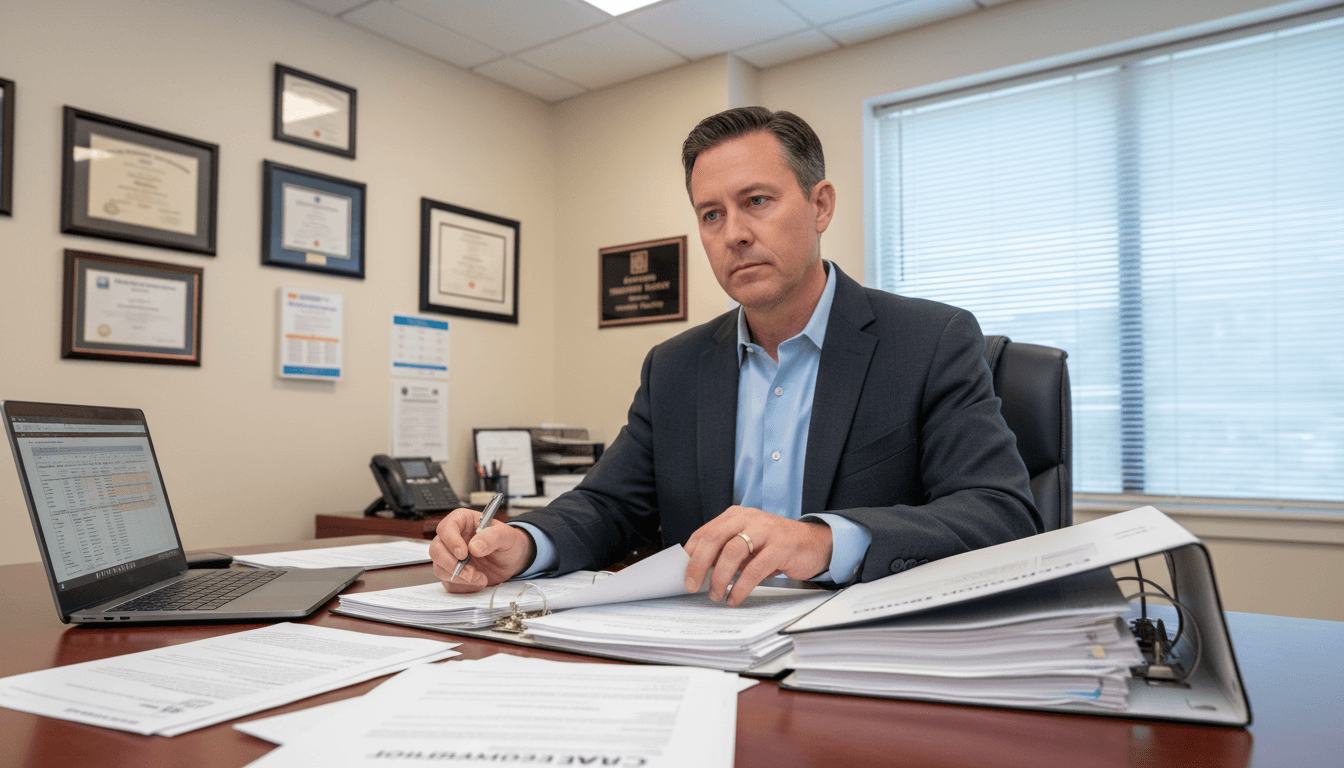
Why Addiction Treatment Directors Are Still Losing Hours to Compliance Documentation for Substance Abuse Accreditation in 2026 (And How to Stop)
The Problem No One Talks About
You didn't become an Addiction Treatment Director to spend your evenings cross-referencing treatment plan updates with CARF standards or combing through counselor notes to ensure every biopsychosocial assessment meets Joint Commission expectations. You got into this work because you believe in recovery. Because you've seen what happens when someone finally gets the right care at the right time.
But here you are — buried under compliance documentation requirements that seem to multiply with every accreditation cycle. Your clinical team is stretched thin. Your counselors are already carrying caseloads that push ethical boundaries. And somehow, the documentation burden keeps landing on your desk — because if a surveyor finds gaps, it's your program on the line.
The part that stings most? You know that every hour you spend auditing charts, rewriting progress notes, and chasing missing signatures is an hour you're not spending on the clinical leadership your team desperately needs. Your staff didn't sign up for paperwork marathons either. They signed up to help people get sober and stay alive.
If you've ever sat in your office after everyone else has gone home, staring at a stack of charts that aren't survey-ready and wondering how you're supposed to maintain both clinical quality and documentation compliance — you're not failing. The system is failing you.
Why This Keeps Happening
Substance abuse accreditation bodies — whether CARF, Joint Commission, or state-specific licensing agencies — have legitimate reasons for demanding rigorous documentation. Accountability protects patients. Standards save lives. Nobody in addiction treatment leadership disputes that.
But here's the structural problem: the documentation standards were designed for a world where clinical encounters could be neatly packaged into discrete, predictable formats. Addiction treatment doesn't work that way. A session with a client in early recovery might shift from motivational interviewing to crisis intervention to family systems work within thirty minutes. Capturing that complexity in documentation that simultaneously satisfies clinical accuracy, billing requirements, and accreditation standards requires a level of administrative precision that most treatment programs were never resourced to sustain.
Compounding this is the reality of workforce turnover in addiction treatment. When a counselor leaves — and turnover rates in this field remain among the highest in behavioral health — their documentation gaps become your emergency. New hires need training not just in clinical protocols but in the specific documentation language your accrediting body expects. That training takes time you don't have, delivered by supervisors who are already overwhelmed.
And then there's the moving target. Accreditation standards evolve. State regulations shift. Payer requirements change. Every update means another round of template revisions, staff retraining, and chart audits. The cycle never ends because it was never designed to end.
The Real Cost of Compliance Documentation for Substance Abuse Accreditation
The costs are both measurable and devastating — even when they're hard to quantify precisely because every program experiences them differently.
Clinical staff burnout and attrition. When counselors spend more time documenting than counseling, they burn out faster. They leave. And every departure triggers a cascade — caseload redistribution, recruitment costs, onboarding time, and more documentation gaps that land on your desk.
Survey anxiety that becomes chronic. Many Addiction Treatment Directors describe living in a state of perpetual accreditation anxiety — not because their programs deliver poor care, but because they can never be fully confident their documentation reflects the quality of care being provided. The gap between what's happening in session and what's captured on paper becomes a source of constant, low-grade dread.
Diverted leadership bandwidth. Every hour you spend on documentation remediation is an hour not spent on program development, community partnerships, staff mentoring, or the strategic work that actually improves patient outcomes. The irony is painful: accreditation exists to ensure quality, but the documentation burden can actively undermine the leadership capacity that drives quality.
Revenue vulnerability. Documentation deficiencies don't just threaten accreditation status — they create billing vulnerabilities. Denied claims, recoupment demands, and audit findings can destabilize the financial foundation of programs that are already operating on thin margins.
Patient impact. This is the cost that keeps you up at night. When your team is drowning in documentation, the people who suffer most are the patients. Shorter sessions. Delayed treatment plan updates. Missed opportunities for clinical intervention — not because your counselors don't care, but because the system has consumed the time they need to care effectively.
What Leading Addiction Treatment Directors Are Doing Differently in 2026
The most effective Addiction Treatment Directors in 2026 have stopped trying to solve a systems problem with individual effort. They've recognized that no amount of personal sacrifice — no number of late nights auditing charts — can sustainably close the gap between clinical reality and documentation requirements.
Instead, they're leveraging AI-powered clinical documentation tools that capture the substance and nuance of clinical encounters in real time, producing notes that meet accreditation standards without requiring counselors to spend their evenings reconstructing sessions from memory.
This isn't about replacing clinical judgment. It's about removing the mechanical burden that sits between clinical expertise and compliant documentation. The best AI scribing solutions understand the specific language and structure that accrediting bodies expect — individualized treatment plan justifications, measurable objectives tied to assessed needs, progress documentation that demonstrates medical necessity and ongoing clinical engagement.
Directors who have made this shift report something that sounds almost too simple to be true: their counselors document during the session, not after it. Their charts are survey-ready in real time, not after weekend-long audit marathons. And their own time — the time they used to spend on documentation remediation — is redirected to the clinical leadership work that actually moves outcomes.
How Scribing.io Solves Compliance Documentation for Substance Abuse Accreditation
Scribing.io was built for exactly this problem. It's an AI medical scribe platform that listens to clinical encounters and generates accurate, structured documentation that aligns with the standards your accrediting body requires.
Real-time, accreditation-aware documentation. Scribing.io captures the clinical encounter as it happens — the motivational interviewing techniques, the risk assessments, the treatment plan modifications — and produces notes structured to meet CARF, Joint Commission, and state-specific documentation requirements. Your counselors stay present with their clients instead of splitting attention between the patient and the paperwork.
Consistency across your clinical team. One of the biggest accreditation risks in addiction treatment is documentation variability between counselors. Scribing.io creates a consistent documentation standard across your entire program, regardless of individual writing ability or documentation training. New hires produce survey-ready notes from their first clinical encounter.
Reduced audit exposure. When every note is structured, complete, and generated in real time, the chart audit process transforms from a crisis management exercise into a routine quality check. You stop dreading accreditation surveys because your documentation reflects what's actually happening in your program — which is excellent clinical care.
Designed for behavioral health complexity. Scribing.io understands that addiction treatment sessions don't follow a simple SOAP format. Group therapy, individual counseling, family sessions, case management contacts, crisis interventions — the platform adapts to the full spectrum of clinical encounters that substance abuse accreditation bodies expect to see documented.
Time returned to clinical leadership. This is the outcome that matters most. When your documentation system works, you get your role back. You become the clinical leader your team needs instead of the compliance officer your program can't afford to hire.
Getting Started Takes Less Than 10 Minutes
You've spent enough evenings and weekends on documentation remediation. Your counselors have spent enough energy on administrative work that pulls them away from the clinical relationships that drive recovery.
Scribing.io integrates into your existing clinical workflow without disruption. Setup is fast. The learning curve is minimal. And the impact on your accreditation readiness is immediate.
Your program deserves documentation infrastructure that matches the quality of care you provide. Your team deserves to spend their time on the work that called them to this field. And you deserve to lead your program without the constant weight of compliance anxiety.
Try Scribing.io Free — and find out what it feels like to walk into your next accreditation survey with confidence instead of dread.


