Posted on
Dec 29, 2025
AI Documentation for OB-GYN Providers
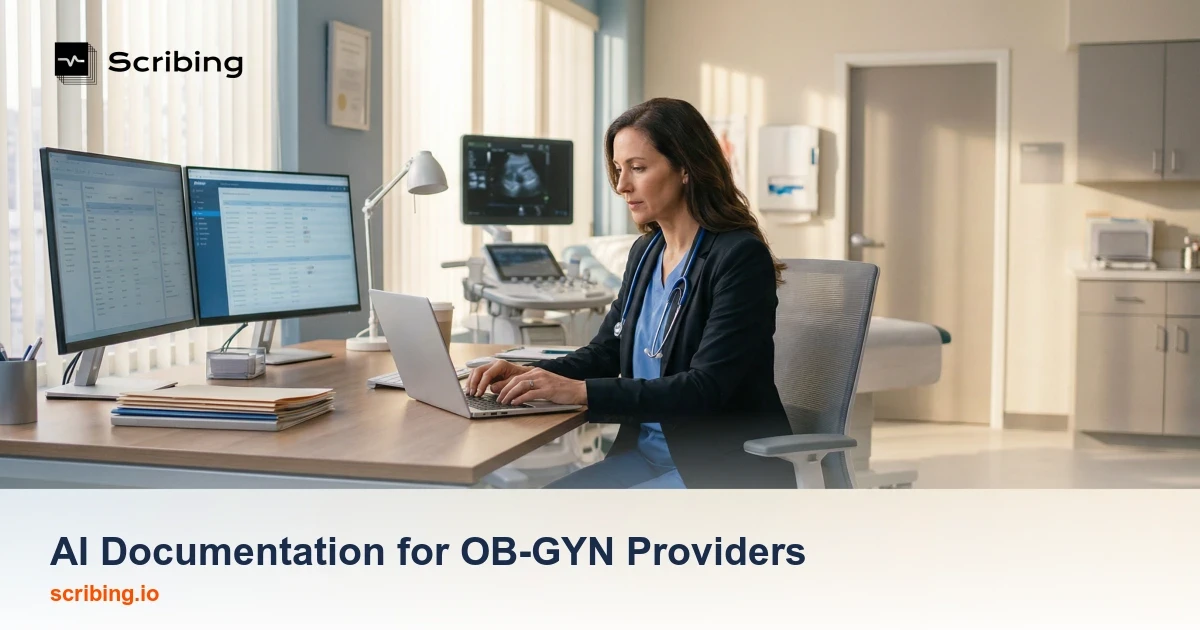
AI Documentation for OB-GYN Providers: Streamlining Prenatal and Preventive Care
The demands on OB-GYN practices continue to grow, with providers balancing comprehensive prenatal care, well-woman exams, and increasingly complex documentation requirements. AI-powered documentation tools are transforming how OB-GYN providers capture clinical encounters, reducing administrative burden while ensuring compliance and accuracy.
The Documentation Challenge in Women's Health
OB-GYN providers face unique documentation challenges. Prenatal visits require consistent, detailed tracking across multiple appointments, while well-woman exams demand thorough preventive care documentation. The time spent on charts often extends well beyond clinic hours, contributing to burnout and reducing face-to-face patient interaction.
Understanding Key Billing Requirements
Global OB Care (CPT 59400)
Global obstetric billing under CPT 59400 encompasses antepartum care, delivery, and postpartum care as a bundled service. Proper documentation must clearly demonstrate:
Initial and subsequent prenatal visits
Risk assessments and ongoing monitoring
Labor, delivery, and immediate postpartum care
Standard postpartum follow-up visits
AI documentation systems can help track the continuity of care required for global OB billing, ensuring no critical elements are missed across the pregnancy journey.
Preventive Medicine Services (CPT 99381-99397)
Well-woman exams fall under preventive medicine codes, with specific requirements based on patient age and whether the visit represents a new or established patient. Documentation must support:
Age-appropriate screenings and counseling
Comprehensive history and examination elements
Risk factor assessments
Health promotion guidance
How AI Documentation Supports Compliance
Modern AI documentation tools understand the nuanced requirements of OB-GYN coding. These systems can:
Prompt for Required Elements: AI assistants recognize when documentation gaps exist and can prompt providers to address missing components before finalizing notes.
Track Longitudinal Care: For prenatal patients, AI tools maintain awareness of previous visits, ensuring consistency and flagging changes that require attention.
Support Medical Necessity: Proper documentation of medical necessity protects practices during audits and ensures appropriate reimbursement.
Consent Considerations for AI-Assisted Documentation
When implementing AI documentation in your practice, informed consent remains essential. Patients should understand:
How AI assists in creating their medical records
What information is captured and processed
How their data is protected and stored
Their rights regarding AI-generated documentation
Clear consent processes build trust and ensure ethical implementation of these powerful tools.
Best Practices for Implementation
Start with High-Volume Encounter Types
Begin AI documentation adoption with your most common visit types—routine prenatal visits and annual well-woman exams offer predictable documentation patterns ideal for AI assistance.
Maintain Provider Oversight
AI documentation should augment, not replace, clinical judgment. Always review AI-generated notes for accuracy and completeness before signing.
Train Your Team
Ensure all clinical staff understand how to work alongside AI documentation tools effectively, maximizing efficiency gains while maintaining quality.
The Future of OB-GYN Documentation
AI documentation represents a significant opportunity for OB-GYN practices to reclaim time for patient care while strengthening compliance and reducing errors. As these tools continue to evolve, early adopters will benefit from improved workflows, better work-life balance, and enhanced patient relationships.
Taking the Next Step
If you're considering AI documentation for your OB-GYN practice, start by evaluating your current documentation pain points. Whether it's the repetitive nature of prenatal visit notes or the comprehensive requirements of preventive exams, AI solutions can be tailored to address your specific needs.
The goal isn't to remove the provider from documentation—it's to free you to focus on what matters most: delivering exceptional care to your patients throughout every stage of their lives.
Ready to explore how AI documentation can transform your OB-GYN practice? Contact us to learn more about solutions designed specifically for women's health providers.


