Posted on
Jun 1, 2026
AI Scribing for Oncologists
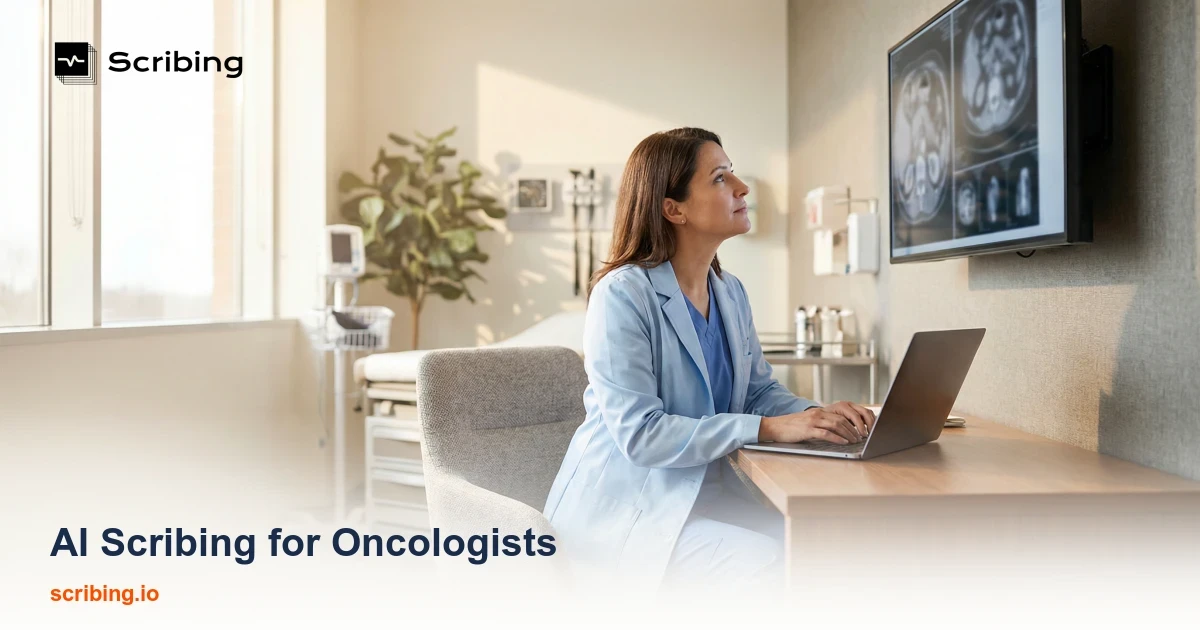
AI Scribing for Oncologists: Transforming Documentation in Cancer Care
Oncology is one of the most documentation-intensive specialties in medicine. Between complex treatment protocols, detailed consent processes, and the emotional weight of patient conversations, oncologists often find themselves spending more time on paperwork than patient care. AI scribing technology is changing that equation—offering a powerful solution to documentation burden while maintaining the precision that cancer care demands.
The Unique Documentation Challenges in Oncology
Oncologists face documentation requirements that go far beyond a standard office visit. From chemotherapy planning to survivorship care, every phase of the cancer journey requires meticulous record-keeping. The complexity multiplies when you consider:
Multi-step treatment protocols spanning months or years
Coordination across surgical, radiation, and medical oncology teams
Detailed informed consent for high-risk treatments
Regulatory compliance requirements
Insurance pre-authorizations and appeals
Traditional documentation methods simply cannot keep pace with these demands without sacrificing either physician time or documentation quality.
Chemotherapy Planning & Survivorship Documentation
One of the most critical areas where AI scribing proves invaluable is in chemotherapy planning and survivorship care. These documentation requirements are not just administrative—they're legally mandated and essential for patient safety.
Chemotherapy Planning
Chemotherapy planning documentation must capture:
Specific regimen selection and rationale
Dosing calculations based on body surface area
Anticipated side effects discussed with patients
Monitoring parameters and schedule
Contingency plans for adverse reactions
AI scribing tools can automatically structure these conversations into compliant documentation, ensuring nothing falls through the cracks while the oncologist focuses on the patient discussion.
Survivorship Care
Survivorship care plans are increasingly recognized as essential for long-term patient outcomes. These comprehensive documents require:
Treatment summaries
Long-term monitoring schedules
Late effect warnings
Lifestyle recommendations
Follow-up care coordination
AI scribes can help generate these detailed plans by extracting relevant information from the patient encounter and prior records, dramatically reducing the time required to produce these critical documents.
Streamlining Consent Documentation
Informed consent in oncology carries particular weight given the serious nature of treatments and their potential side effects. AI scribing excels at capturing consent conversations accurately and completely.
Chemotherapy Administration Consent (96413)
For chemotherapy administration procedures billed under CPT code 96413, documentation must clearly establish:
The specific agents being administered
Expected duration and frequency of treatment
Potential immediate and delayed side effects
Emergency protocols and contact information
Patient understanding and agreement
AI scribing captures these consent discussions in real-time, ensuring that all required elements are documented while allowing the oncologist to maintain eye contact and emotional connection with patients during these difficult conversations.
Evaluation and Management Documentation (99215)
High-complexity office visits (99215) in oncology require documentation supporting:
Comprehensive history review
Complex medical decision-making
Time spent in counseling and coordination
Multiple chronic conditions management
Treatment response evaluation
AI scribes are particularly adept at capturing the nuanced clinical decision-making that justifies 99215 billing, reducing audit risk while ensuring appropriate reimbursement for the complexity of oncologic care.
The Benefits of AI Scribing for Oncology Practices
Reclaimed Time for Patient Care
Studies suggest physicians spend up to two hours on documentation for every hour of direct patient care. AI scribing can reduce documentation time by 50-70%, giving oncologists precious hours back for what matters most—their patients.
Improved Documentation Quality
AI scribes don't get tired, distracted, or overwhelmed. They capture conversations comprehensively, reducing the risk of missing critical details that could impact patient safety or legal compliance.
Enhanced Patient Experience
When oncologists aren't typing during visits, they can be fully present for patients facing some of life's most challenging moments. This improved presence strengthens the therapeutic relationship and enhances patient satisfaction.
Reduced Burnout
Documentation burden is a leading contributor to physician burnout, which is particularly prevalent in oncology. AI scribing addresses this root cause, helping retain experienced oncologists in practice.
Implementing AI Scribing in Your Oncology Practice
Successful implementation requires attention to:
Workflow integration — The AI scribe should fit seamlessly into existing clinical workflows
Specialty-specific training — Ensure the system understands oncology terminology and protocols
Compliance verification — Confirm documentation meets all regulatory and billing requirements
Staff training — Everyone should understand how to optimize the technology
Looking Ahead
As AI technology continues to advance, we can expect even more sophisticated support for oncology documentation—from automated treatment summary generation to predictive analytics that flag documentation gaps before they become compliance issues.
For oncologists seeking to reduce administrative burden while maintaining excellence in patient care, AI scribing represents not just an incremental improvement, but a fundamental transformation in how cancer care is documented and delivered.
The future of oncology documentation is here. The question isn't whether to adopt AI scribing—it's how quickly you can implement it to benefit your patients and your practice.


