Posted on
Jan 29, 2026
AI Scribing for Plastic Surgeons (Cosmetic)
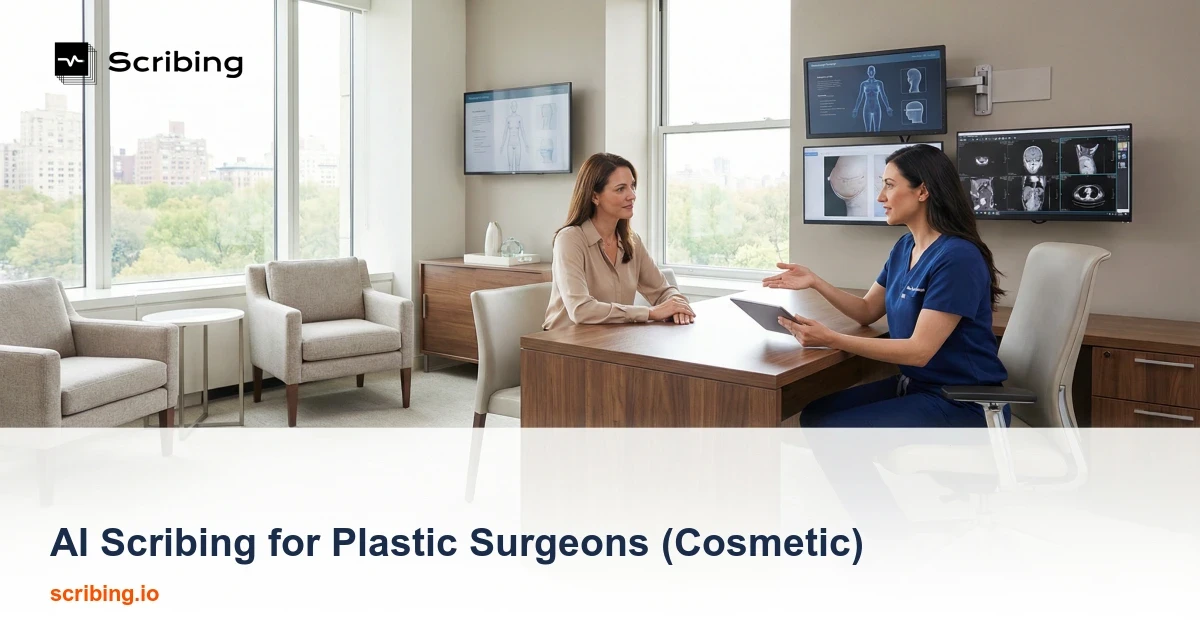
AI Scribing for Plastic Surgeons: Transforming Cosmetic Practice Documentation
As a cosmetic plastic surgeon, your artistry and precision define your practice. Yet for every hour spent sculpting and refining, you likely spend nearly as much time documenting. From detailed aesthetic consultations to comprehensive procedure notes, the documentation demands in cosmetic plastic surgery are uniquely complex—and critically important.
Enter AI medical scribing: a technology that's revolutionizing how cosmetic practices handle documentation while maintaining the meticulous standards your specialty demands.
The Unique Documentation Challenges in Cosmetic Plastic Surgery
Unlike insurance-driven medical specialties, cosmetic plastic surgery operates in a distinct regulatory and business environment. Your documentation serves multiple purposes:
Legal protection in an elective procedure landscape
Clear communication of aesthetic goals and realistic expectations
Comprehensive quote documentation for self-pay patients
Before-and-after tracking for outcomes assessment
Marketing compliance and patient relationship management
Traditional documentation methods—whether dictation services, template-heavy EHRs, or manual note-taking—often fall short of capturing the nuanced conversations that define cosmetic consultations.
Aesthetic Consults: Where AI Scribing Shines
The aesthetic consultation is arguably the most critical touchpoint in your patient relationship. It's where you discuss desired outcomes, assess candidacy, explain procedures, and establish the foundation for informed consent.
Capturing the Complete Consultation
AI scribing technology listens to your natural conversation with patients and transforms it into structured, comprehensive documentation. This means:
Detailed chief complaint documentation capturing the patient's own words about their aesthetic concerns
Complete physical examination findings including measurements, asymmetries, and tissue quality assessments
Discussion of multiple procedure options with associated risks and benefits
Patient questions and your responses documented verbatim when relevant
Aesthetic goal alignment clearly recorded to demonstrate shared understanding
Supporting Legal Compliance
In cosmetic surgery, your consultation notes serve as your first line of legal defense. AI scribing helps ensure:
Every discussed risk is documented
Alternative treatment options are recorded
Patient expectations (realistic or otherwise) are captured
Your professional recommendations are clearly stated
Any contraindications or concerns are noted
This level of documentation detail would be nearly impossible to achieve through traditional methods without significantly extending appointment times.
Procedure Notes: Precision in Documentation
Cosmetic procedure notes require exceptional detail—not for insurance reimbursement, but for continuity of care, revision planning, and medicolegal protection.
AI scribing can capture:
Specific techniques employed
Product types, volumes, and placement locations (for injectables)
Implant specifications and pocket details
Intraoperative decisions and their rationale
Any complications or unexpected findings
This creates a comprehensive surgical record that serves you whether you're planning a touch-up procedure or responding to a patient concern years later.
Non-Insurance Documentation: Quote Generation and Cosmetic Consent
Streamlining the Financial Conversation
Cosmetic practices operate on a retail model where transparent pricing and clear financial documentation are essential. AI scribing can help structure:
Itemized quote documentation linking discussed procedures to pricing
Package options when multiple procedures are considered
Financing discussions and payment plan agreements
Deposit and cancellation policy acknowledgments
Consent Documentation Beyond the Standard Form
While your practice likely uses standardized consent forms, AI scribing captures the informed consent conversation—documenting that you discussed:
Specific risks relevant to the patient's anatomy or health history
Expected recovery timeline and restrictions
Realistic outcome expectations
Revision policies
Photo and testimonial consent discussions
This narrative documentation complements your formal consent forms and demonstrates the thoroughness of your informed consent process.
Implementation Considerations for Cosmetic Practices
Privacy and HIPAA Compliance
Any AI scribing solution must meet rigorous HIPAA standards. Look for:
BAA (Business Associate Agreement) availability
End-to-end encryption
Clear data retention and deletion policies
No use of patient data for AI training without explicit consent
Integration with Practice Management
Cosmetic practices often use specialized software for patient management, photo documentation, and quote generation. Consider how AI scribing will integrate with your existing workflow.
Staff Training and Workflow Adjustment
The transition to AI scribing requires some adjustment. Your team should understand:
How to initiate and manage recording sessions
Review and editing workflows
Patient notification procedures
Troubleshooting basics
The ROI of AI Scribing in Cosmetic Practice
For cosmetic plastic surgeons, the return on investment extends beyond time savings:
See more patients without sacrificing documentation quality
Reduce after-hours charting and improve work-life balance
Enhance legal protection through comprehensive documentation
Improve consultation conversions by being fully present with patients
Decrease transcription costs compared to traditional services
Looking Forward
AI scribing technology continues to evolve, with improvements in aesthetic-specific terminology recognition, automated before-and-after photo integration, and enhanced quote generation capabilities on the horizon.
For cosmetic plastic surgeons, the question is no longer whether to adopt AI scribing, but how quickly you can implement it to transform your practice documentation.
Ready to explore how AI scribing can elevate your cosmetic plastic surgery practice? The future of documentation is here—and it's designed to let you focus on what you do best: helping patients achieve their aesthetic goals.


