Posted on
Jan 16, 2026
AI Documentation for Sports Medicine
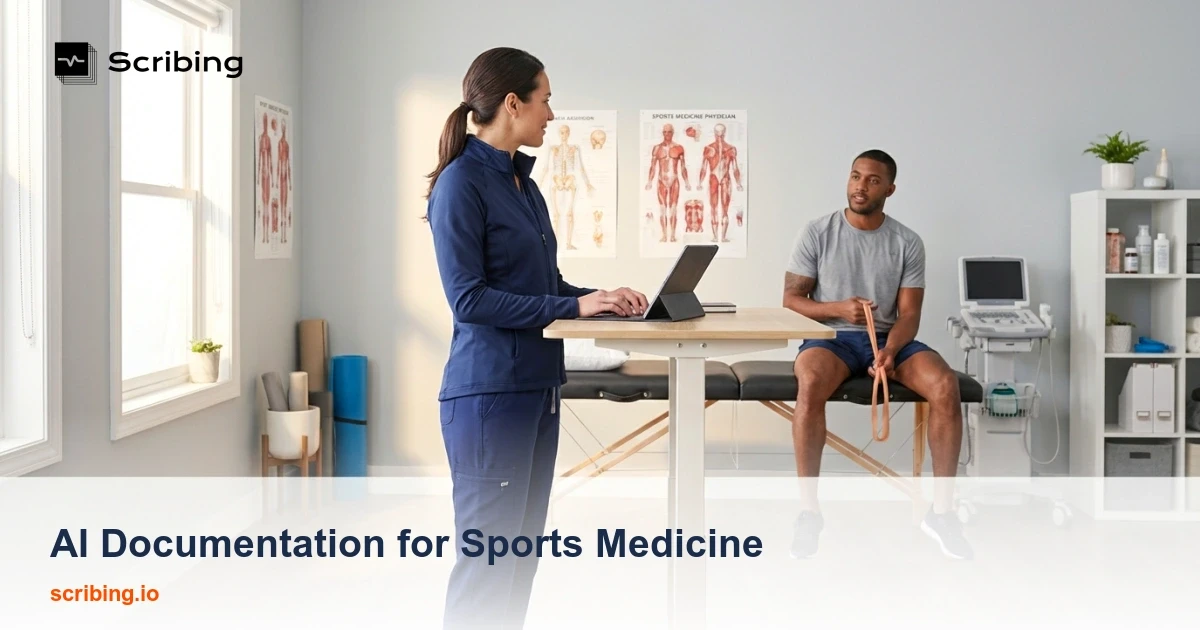
AI Documentation for Sports Medicine: Navigating Injury Rehab, Concussion Protocols, and Compliance
The world of sports medicine moves fast—athletes need to return to play safely, injuries require precise documentation, and regulatory requirements demand meticulous record-keeping. Enter artificial intelligence: a game-changing tool that's transforming how sports medicine professionals handle documentation while staying compliant with critical protocols.
The Documentation Challenge in Sports Medicine
Sports medicine practitioners face unique documentation demands. Between managing injury rehabilitation programs, implementing concussion protocols, and ensuring proper consent for procedures, the paperwork can feel overwhelming. Every therapeutic exercise session (CPT 97110), joint injection (CPT 20610), and ImPACT test requires accurate, timely documentation that meets both legal and insurance requirements.
Traditional documentation methods often lead to:
Time taken away from patient care
Incomplete or inconsistent records
Delayed billing and reimbursement
Compliance gaps that create liability exposure
How AI Documentation Addresses Key Sports Medicine Needs
Injury Rehabilitation Documentation
When documenting therapeutic exercise sessions under CPT 97110, AI-powered systems can automatically capture essential elements including:
Specific exercises performed
Time spent in direct patient contact
Patient response and progress metrics
Functional outcome measurements
Treatment plan modifications
AI documentation tools learn your practice patterns and suggest appropriate language that satisfies payer requirements while accurately reflecting the skilled nature of services provided.
Concussion Protocol Compliance
Concussion management carries significant legal weight. State laws and organizational policies mandate specific return-to-play protocols, and documentation must demonstrate adherence to these guidelines. AI systems can:
Track symptom progression using standardized scales
Document each phase of graduated return-to-play protocols
Flag when required waiting periods haven't been met
Ensure ImPACT testing results are properly recorded and compared to baseline
Generate reports that demonstrate protocol compliance
This systematic approach protects both the athlete and the practitioner from potential legal challenges related to premature return-to-play decisions.
Streamlined Consent Management
Informed consent documentation is critical for procedures like joint injections (CPT 20610) and neurocognitive testing. AI documentation platforms can:
Generate procedure-specific consent forms
Ensure all required elements are addressed
Store signed consents with linked procedure notes
Track consent expiration for ongoing treatments
Maintain audit trails for compliance verification
Legal Considerations and Risk Mitigation
Sports medicine professionals operate under intense scrutiny. Parents, coaches, schools, and professional organizations all have vested interests in athlete care decisions. Proper documentation serves as your best defense.
Key Legal Protections Enabled by AI Documentation
Standard of Care Evidence: AI systems help ensure documentation reflects that care met or exceeded accepted standards for injury rehabilitation and concussion management.
Timeline Accuracy: Automated timestamps and sequential documentation demonstrate when evaluations occurred, when protocols were initiated, and when return-to-play decisions were made.
Protocol Adherence: Built-in templates aligned with current concussion guidelines (such as the Consensus Statement on Concussion in Sport) provide evidence of best-practice compliance.
Complete Records: AI reduces the risk of missing documentation that could create legal vulnerabilities.
Implementing AI Documentation in Your Practice
Getting Started
Assess your current workflow: Identify where documentation bottlenecks occur
Choose specialty-specific solutions: Generic medical AI may not address sports medicine requirements
Train your team: Ensure all staff understand how to use AI tools effectively
Customize templates: Adapt AI suggestions to match your practice patterns and local requirements
Regular audits: Review AI-generated documentation for accuracy and completeness
Best Practices for Compliance
Always review AI-generated content before finalizing
Maintain human oversight of clinical decision documentation
Keep AI systems updated with current coding guidelines
Document any modifications to standard protocols with clear clinical reasoning
The Future of Sports Medicine Documentation
AI documentation represents more than efficiency—it's becoming the standard of care for maintaining comprehensive, compliant medical records. As regulations around concussion management continue to evolve and payer requirements become more stringent, practices that leverage AI documentation will be better positioned to:
Demonstrate protocol compliance
Reduce liability exposure
Improve reimbursement rates
Focus more time on patient care
Conclusion
Sports medicine documentation doesn't have to be a burden. AI-powered solutions offer a path to better compliance with injury rehabilitation requirements and concussion protocols while streamlining consent processes for procedures like joint injections and ImPACT testing. By embracing these tools, sports medicine professionals can protect their athletes, their practices, and their peace of mind.
Ready to transform your sports medicine documentation? The right AI solution can help you stay compliant, reduce administrative burden, and get back to what matters most—helping athletes perform at their best.


