Posted on
Jan 14, 2026
Why Emergency Physicians Are Still Losing Hours to Rapid Documentation Requirements in High-Volume ED Settings in 2026 (And How to Stop)
The Problem No One Talks About
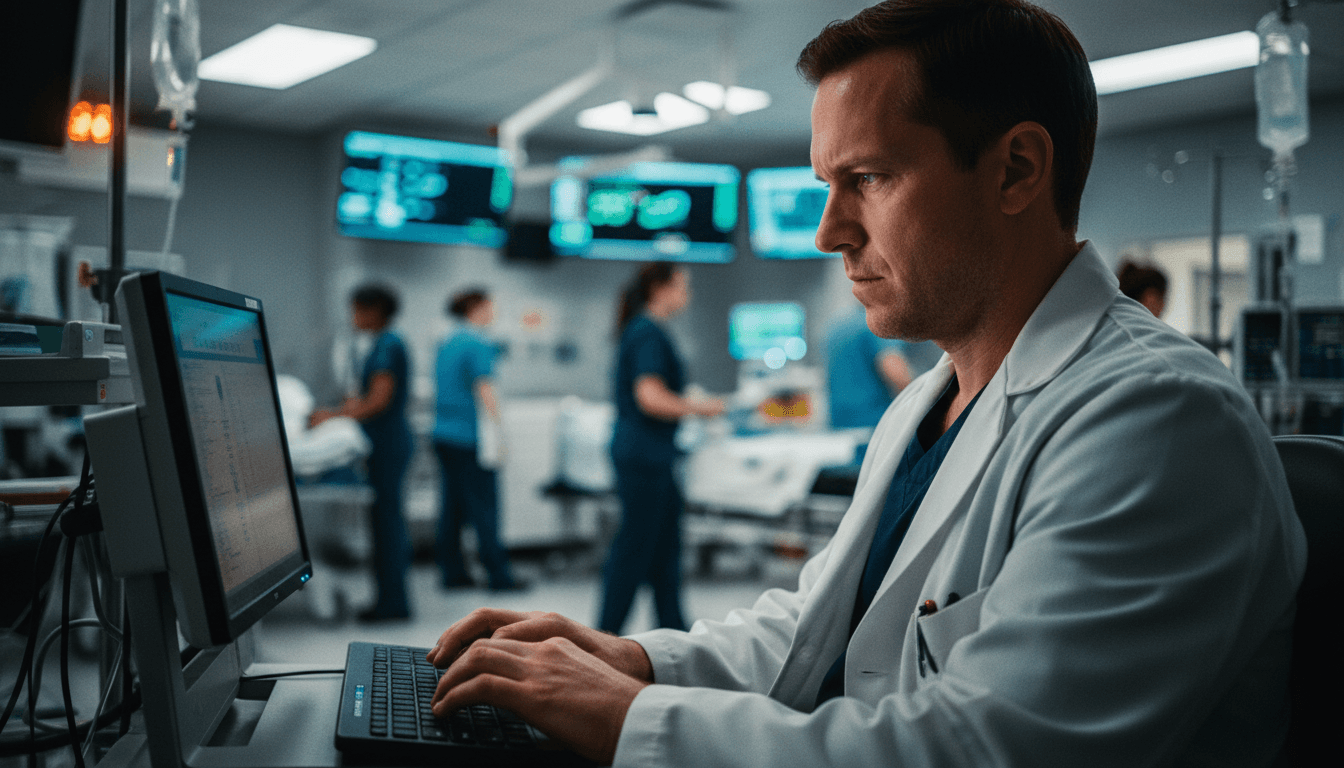
You just intubated a patient in Bay 3. There are fourteen charts open on your screen. The waiting room has been at capacity since 7 AM, and the charge nurse just told you there are three more ambulances inbound. Somewhere between the chest pain in Room 8 and the pediatric fever in Room 12, you're supposed to produce documentation that's thorough enough for medical-legal protection, specific enough for accurate billing, and completed before the next wave hits.
You already know this. You live it every shift.
What nobody talks about — not the administrators, not the consultants, not the people designing your workflow — is what it actually feels like to carry that documentation burden while simultaneously making life-and-death decisions at a pace most professionals will never understand. The cognitive weight of knowing that every undocumented detail is a liability. The guilt of choosing between spending another minute with a frightened patient or finishing the chart from two patients ago. The way your shift doesn't actually end when the last patient is seen — it ends an hour or two later, when you've finally closed out your charts from a computer at home, in the dark, while your family sleeps.
You didn't go into emergency medicine to be a data entry specialist. But in 2026, that's what the job has quietly become for far too many of you.
Why This Keeps Happening
The emergency department is the only clinical environment where documentation speed must match the velocity of patient encounters — and that velocity has only accelerated. Patient volumes have increased steadily across the country, boarding times have stretched ED capacity, and the complexity of documentation requirements has grown alongside regulatory and billing demands.
EHR systems were designed for structured data capture, not for the controlled chaos of emergency medicine. They impose rigid templates and click-heavy workflows on a specialty that demands fluidity and speed. The result is a fundamental mismatch: the tool meant to support your work actively competes with it for your attention.
Traditional scribes helped — when you could find them, train them, and retain them. But the staffing challenges that affect every corner of healthcare hit scribe programs hard. Turnover is high, training takes months, and consistency varies wildly from shift to shift. Many EDs that once relied on in-person scribes have watched those programs collapse under their own logistical weight.
Meanwhile, the documentation requirements themselves haven't simplified. Shared decision-making documentation, medical necessity justifications, procedure notes, re-evaluations, critical care time tracking — every year brings another layer. The expectation is that you'll document more, faster, with fewer resources, while seeing sicker patients at higher volumes. It's not sustainable, and the fact that it's been normalized doesn't make it acceptable.
The Real Cost of Rapid Documentation Requirements in High-Volume ED Settings
The costs are both measurable and deeply personal, and they compound over time.
Clinical risk escalates. When documentation is rushed or deferred, critical details get lost. A pertinent negative not recorded. A reassessment not captured. A conversation about risks and alternatives that happened at the bedside but never made it into the chart. These gaps don't just affect billing — they become vulnerabilities in malpractice cases, peer review, and quality audits.
Throughput suffers. Every minute an emergency physician spends on documentation is a minute not spent seeing the next patient. In a high-volume ED, documentation bottlenecks directly translate to longer wait times, more patients who leave without being seen, and increased boarding pressure. The department's operational performance becomes tethered to how fast its physicians can type.
Revenue erodes quietly. Under-documentation is endemic in emergency medicine — not because physicians don't provide high-quality care, but because they don't have time to document the full complexity of what they did. Critical care time goes unbilled. High-complexity visits get downcoded. Procedures are documented with minimal detail. The financial impact across a department over a year is substantial.
Burnout deepens. The connection between documentation burden and physician burnout has been well established in the medical literature. For emergency physicians specifically, the combination of high-acuity clinical work and relentless documentation pressure creates a uniquely corrosive form of occupational stress. Pajama time — charting after hours at home — has become so normalized that many emergency physicians don't even recognize it as abnormal anymore. But it is. It represents unpaid labor that directly erodes quality of life, relationships, and career longevity.
What Leading Emergency Physicians Are Doing Differently in 2026
The physicians who have broken free from the documentation trap share a common realization: the solution isn't working harder or typing faster. It's removing themselves from the documentation bottleneck entirely.
In 2026, ambient AI medical scribe technology has matured to the point where it can reliably listen to physician-patient encounters and generate structured, specialty-specific clinical documentation in real time. This isn't the clunky speech-to-text of a decade ago. Modern AI scribes understand medical terminology, recognize the structure of an emergency medicine encounter, and produce notes that align with the way emergency physicians actually think and practice.
The shift is conceptual as much as technological. Instead of treating documentation as a parallel task that competes with patient care, forward-thinking emergency physicians are treating it as a byproduct of patient care — something that happens automatically as they do what they were trained to do: talk to patients, examine them, think through differentials, and make decisions.
This approach doesn't just save time. It fundamentally changes the experience of practicing emergency medicine. Physicians describe finishing shifts with their charts complete. Going home without a stack of open encounters. Having the mental bandwidth to be fully present with their sickest patients because they're not simultaneously rehearsing how they'll document the encounter later.
How Scribing.io Solves Rapid Documentation Requirements in High-Volume ED Settings
Scribing.io was built for exactly this problem — not documentation in general, but the specific, unforgiving documentation demands of high-volume clinical environments like the emergency department.
It listens while you work. Scribing.io's ambient AI captures your patient encounters naturally, without requiring you to dictate, click, or type. You talk to your patient. You perform your exam. You think out loud the way emergency physicians do. Scribing.io transforms that encounter into a structured, comprehensive clinical note.
It understands emergency medicine. The notes Scribing.io generates aren't generic templates stuffed with your words. They reflect the structure and conventions of emergency medicine documentation — HPI, ROS, physical exam, medical decision-making, reassessments, procedure notes, and disposition. The output reads like a note written by an experienced emergency medicine scribe who understands what matters.
It keeps pace with your volume. In a high-volume ED, you might see three or four patients in an hour during peak times. Scribing.io doesn't fall behind, call in sick, or need a break. It scales with your workflow, generating notes as fast as you can see patients. Charts that used to sit open for hours get completed in minutes.
It protects you. Because Scribing.io captures the full richness of your patient encounters, your documentation becomes more thorough and defensible. Pertinent negatives get captured. Shared decision-making conversations are documented. Critical care time is tracked. The documentation reflects the actual complexity and quality of the care you delivered — which means better medical-legal protection and more accurate coding.
It gives you back your life. No more pajama time. No more choosing between finishing charts and being present with your family. No more dreading the documentation that waits for you after every shift. Scribing.io doesn't just improve your documentation — it removes the single biggest source of friction and frustration in your professional life.
Getting Started Takes Less Than 10 Minutes
You don't need IT approval, a lengthy implementation process, or a committee meeting. Scribing.io is designed to integrate into your workflow immediately. Sign up, familiarize yourself with the interface, and start your next shift with an AI scribe that's ready when you are.
Most emergency physicians notice the difference within their first shift. Charts closed before you leave the department. Notes that capture what you actually said and did. The unfamiliar sensation of driving home without a mental list of charts still waiting.
You chose emergency medicine because you wanted to be in the arena — making critical decisions, saving lives, being the physician patients need in their worst moments. Documentation should never be the thing that stands between you and that purpose.
Try Scribing.io Free — and find out what it feels like to practice emergency medicine without the documentation burden you've been carrying for years.


