Posted on
Jan 21, 2026
Why Hospice Providers Are Still Losing Hours to End-of-Life Care Documentation and Family Communication Notes in 2026 (And How to Stop)
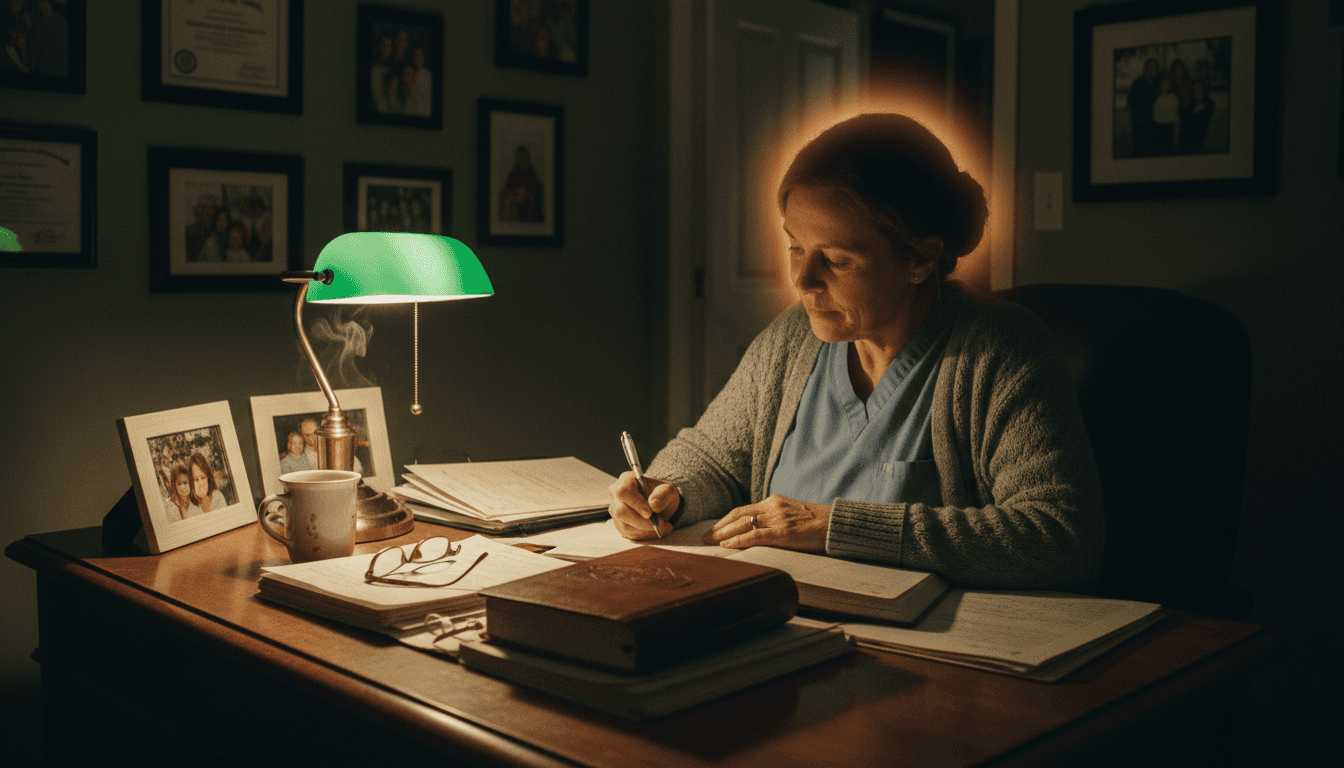
You didn't enter hospice care to spend your evenings reconstructing conversations you had with a grieving daughter at 2 PM. You didn't choose this calling so you could sit in your car after a home visit, typing notes about a patient's final days while the emotional weight of that visit still presses against your chest.
And yet, here you are. Again.
The Problem No One Talks About
Hospice documentation is unlike any other form of clinical charting. It demands precision — regulatory bodies require it. But it also demands something far more difficult: the accurate capture of deeply human moments. The wife who finally asked about discontinuing interventions. The adult child who broke down mid-sentence and shifted the goals-of-care conversation entirely. The patient who, in a moment of unexpected clarity, expressed a wish no one in the family had heard before.
These aren't checkbox encounters. These are layered, emotionally complex interactions that must be documented thoroughly — not just for compliance, but because other members of the interdisciplinary team depend on your notes to provide continuity of care during the most vulnerable chapter of a patient's life.
Family communication notes compound the challenge. Every phone call, every bedside update, every difficult conversation about symptom management or the dying process itself needs to be captured with nuance. Miss a detail, and the next team member walks into a family dynamic they're unprepared for. Document too sparsely, and you risk audit findings. Document too late, and the emotional texture of what actually happened fades into clinical shorthand that serves no one well.
You know all of this. You live it every single shift.
Why This Keeps Happening
The fundamental problem isn't that hospice providers lack discipline or time management skills. It's that the documentation systems most hospice organizations use were never designed for the unique demands of end-of-life care.
Most EHR templates were built for acute or primary care workflows — structured around diagnoses, interventions, and measurable outcomes. Hospice care operates in a fundamentally different paradigm. The "outcome" is a dignified death. The "intervention" is often a conversation. The most critical clinical data might be a family member's emotional readiness — or lack thereof — for what's coming.
Traditional templates force you to flatten these three-dimensional encounters into rigid fields. So you end up doing the work twice: once in the template, and again in free-text notes where you try to capture what actually matters. Meanwhile, family communication notes — calls that might last three minutes or thirty — pile up because there's no efficient workflow for logging them in real time.
Staffing pressures make this worse. Hospice organizations across the country are managing growing census numbers with teams already stretched thin. When documentation bleeds into personal time, burnout follows. And in hospice, burnout doesn't just cost you staff — it costs patients the compassionate presence they deserve in their final days.
The Real Cost of End-of-Life Care Documentation and Family Communication Notes
The costs are both measurable and immeasurable, and if you're a hospice administrator or clinical leader, you're likely feeling both.
Clinical continuity suffers. When documentation is rushed or delayed, critical details about family dynamics, patient wishes, and symptom trajectories get lost. The overnight nurse arrives without context. The social worker walks into a family meeting unaware that a key conversation already happened. The chaplain doesn't know that the patient's spiritual concerns shifted dramatically in the last visit.
Regulatory risk increases. Medicare's hospice documentation requirements are exacting. Care plans must reflect ongoing assessments. Family interactions must be logged to demonstrate the holistic, interdisciplinary approach that justifies the hospice benefit. Incomplete documentation doesn't just invite audit scrutiny — it can trigger payment denials and compliance actions.
Your best people leave. Hospice clinicians are driven by purpose. They tolerate extraordinary emotional demands because the work matters to them profoundly. But when administrative burden becomes the dominant feature of their day — when they spend more time documenting care than delivering it — that purpose gets buried under keystrokes. The clinicians who care most are often the first to burn out, because they refuse to submit documentation that doesn't honor what actually happened with their patients and families.
And the cost you can't quantify: every minute spent charting after a visit is a minute not spent being present. Present with the next patient. Present with your own family. Present with yourself, processing the grief that hospice work inevitably carries.
What Leading Hospice Providers Are Doing Differently in 2026
The hospice organizations that are solving this problem aren't asking their clinicians to type faster or chart smarter. They're eliminating the bottleneck entirely by integrating AI-powered ambient documentation into their workflows.
The shift is straightforward in concept: instead of clinicians reconstructing visits and conversations from memory after the fact, the documentation is generated in real time — from the actual encounter. The clinician reviews, edits, and approves. The narrative structure, the clinical detail, the nuance of family communication — it's all captured as it happens.
This isn't about replacing clinical judgment. It's about freeing clinicians from the mechanical labor of transcription so they can focus their expertise where it actually matters: on the quality of the note, not the production of it.
Early-adopting hospice organizations report that their clinicians are finishing documentation closer to the point of care, their interdisciplinary teams have better information continuity, and — perhaps most importantly — their staff describe feeling like they can be fully present during patient and family interactions again, because they're not mentally cataloging details they'll need to type up later.
How Scribing.io Solves End-of-Life Care Documentation and Family Communication Notes
Scribing.io was built to handle exactly the kind of documentation that templated EHR workflows fail at — the complex, narrative-driven, emotionally nuanced encounters that define hospice care.
Ambient capture of patient visits and family conversations. Scribing.io listens during your encounters and generates comprehensive clinical documentation from the natural flow of conversation. You don't dictate into a device. You don't take shorthand notes. You care for your patient and talk with their family, and the documentation follows.
Family communication notes without the backlog. Phone calls with family members — those quick updates, those difficult 20-minute conversations about what to expect — can be captured and documented in real time. No more scribbling on sticky notes between visits and trying to reconstruct them at 9 PM.
Nuance preservation. Scribing.io's AI is designed to capture the clinical and contextual details that matter in hospice: changes in patient affect, family members' stated concerns, shifts in goals of care, spiritual or psychosocial observations. The notes it generates read like notes written by a clinician who was paying attention — because you were. The AI simply handled the transcription.
Clinician-controlled output. Every note generated by Scribing.io is a draft for your review. You remain the author. You approve, edit, and finalize. The AI does the heavy lifting; you ensure the clinical accuracy and the human authenticity that your patients and families deserve.
Works with your existing systems. Scribing.io is designed to integrate into hospice workflows without requiring you to overhaul your EHR or retrain your entire team. The learning curve is minimal because the tool adapts to how you already work.
For hospice providers specifically, this means: your nurses document visits before they reach their next patient's home. Your social workers capture family meeting notes while the conversation is still fresh. Your entire IDT has access to richer, more timely documentation that actually reflects what's happening in the patient's care.
Getting Started Takes Less Than 10 Minutes
You can be up and running with Scribing.io before your next patient visit. There's no lengthy implementation process, no complex IT setup, no weeks of training.
Sign up. Complete a brief onboarding. Use it on your very next encounter.
If you've been spending your evenings and weekends catching up on documentation — if you've watched talented hospice clinicians leave because the administrative burden eclipsed the purpose that drew them to this work — you owe it to yourself and your team to see what's possible.
Your patients' final days deserve your full presence. Their families deserve your undivided attention during the hardest conversations of their lives. And you deserve to go home at the end of your day knowing the documentation is done — and done well.
Try Scribing.io Free and bring your time and attention back to where it belongs: at the bedside.


