Posted on
Mar 17, 2026
Why Physician Assistants Are Still Losing Hours to Documentation Requirements Across Multiple Specialties in 2026 (And How to Stop)
The Problem No One Talks About
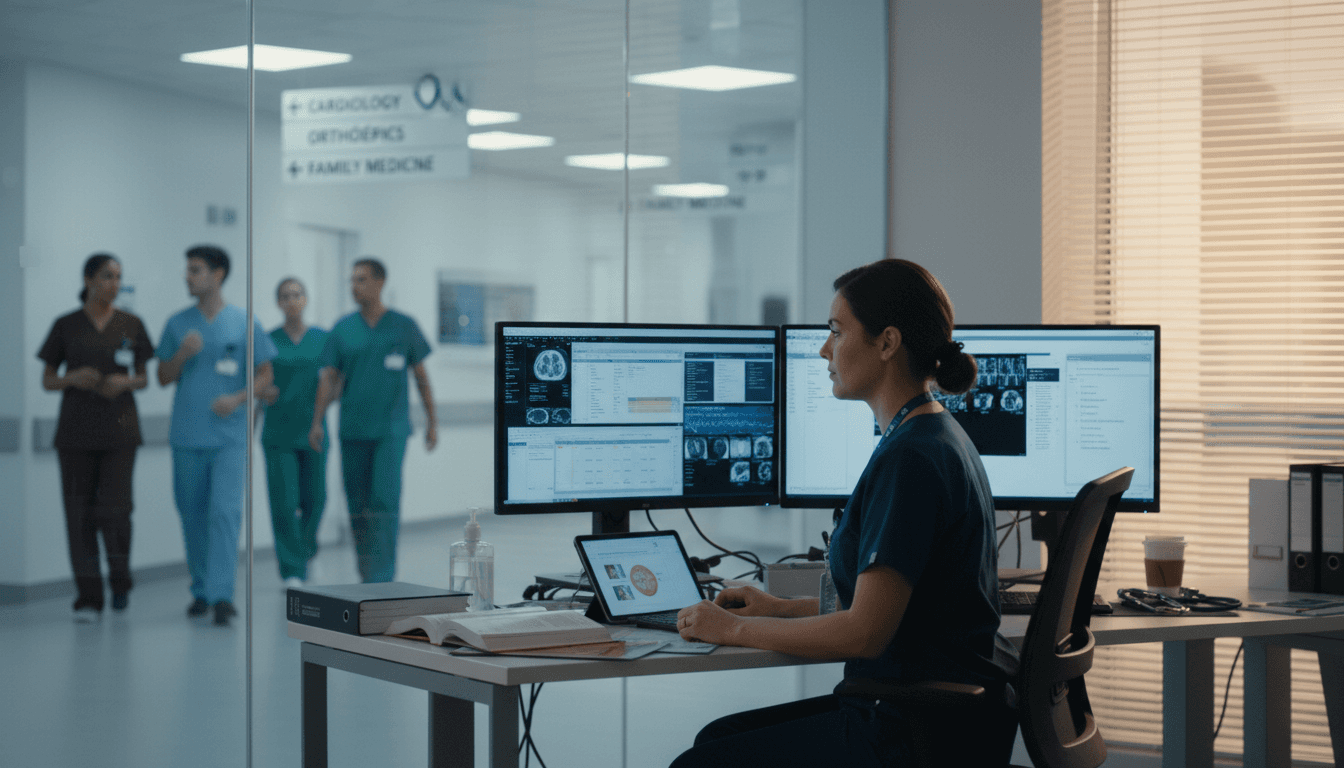
You finished your ortho rotation notes at 9 PM last night. This morning, you're in cardiology, staring at a completely different documentation template with different required elements, different coding expectations, and a different supervising physician who wants notes structured their way. By Thursday, you'll rotate into urgent care, where the pace doubles and the documentation expectations shift again.
This is the reality of being a Physician Assistant in 2026 — and it's one that almost nobody outside the profession fully grasps.
PA programs trained you to be versatile. The healthcare system depends on that versatility. But no one prepared you for the documentation whiplash that comes with working across multiple specialties, sometimes within the same week or even the same day. Each specialty carries its own documentation language, its own compliance nuances, its own expectations for what constitutes a "complete" note. And you're expected to master all of them while maintaining the same patient volume as providers who've documented in one specialty for decades.
If you've ever stayed late rewriting a note because it didn't meet a specialty-specific requirement you didn't realize existed, or felt a knot in your stomach when switching between EMR templates that seem designed to slow you down — you're not struggling because you're not good enough. You're struggling because the system asks something unreasonable and then offers you no tools to manage it.
Why This Keeps Happening
The root of this problem is structural, not personal. Here's why multi-specialty documentation remains so punishing for PAs:
Specialty-specific compliance requirements are moving targets. Cardiology documentation demands differ from dermatology, which differs from emergency medicine. Evaluation and management (E/M) coding guidelines, while theoretically universal, are applied and audited differently across specialties. Payer requirements add another layer of variation.
Supervising physician preferences create invisible standards. One attending wants a detailed narrative HPI. Another wants bullet points. A third wants the assessment and plan front-loaded. These preferences aren't written down anywhere — you learn them through correction, which means through stress.
EMR templates are built for single-specialty workflows. Most electronic medical records are configured by specialty departments. When you move between departments, you're often working in templates optimized for someone else's workflow, forcing you to adapt your documentation habits on the fly.
PA training emphasizes clinical breadth, not documentation depth. Your education rightly focused on clinical decision-making across specialties. But the hours you now spend on documentation — learning each specialty's note structure, required elements, and preferred terminology — represent a hidden curriculum that never ends.
There's no centralized resource for multi-specialty PA documentation. Unlike physicians who typically settle into one documentation rhythm, PAs are expected to be documentation chameleons without a guidebook for the transformation.
The Real Cost of Documentation Requirements Across Multiple Specialties
The toll of this documentation burden extends far beyond inconvenience. It compounds in ways that threaten your career sustainability and your patients' care.
Time erosion is relentless. Every specialty transition costs you cognitive load and clock time. Switching from a surgical note to a primary care note isn't just a template change — it's a mental context switch that fragments your attention and extends your documentation time. Many PAs report spending more time on documentation than on direct patient care, and multi-specialty PAs feel this disparity most acutely.
Burnout accelerates. The American Academy of Physician Associates has consistently identified administrative burden as a leading driver of PA burnout. When your documentation demands shift unpredictably across specialties, you never develop the efficiency that comes with routine. You're perpetually in learning mode, which is cognitively exhausting.
Compliance risk increases. When you're toggling between specialty-specific documentation standards, the probability of missing a required element rises. An incomplete orthopedic surgical note has different consequences than an incomplete psychiatric evaluation, but both can trigger audits, rejected claims, or worse.
Clinical confidence suffers. This is the cost no one measures. When you're anxious about whether your documentation meets a specialty's standards, that anxiety bleeds into your clinical encounters. You start thinking about the note during the patient visit, which is exactly backward from how medicine should work.
What Leading Physician Assistants Are Doing Differently in 2026
The PAs who've found a way through this aren't working harder — they're refusing to accept that documentation has to be a manual, specialty-by-specialty grind. Here's what's shifting:
They're leveraging AI that adapts to context. Rather than memorizing every specialty's documentation quirks, forward-thinking PAs are using AI-powered documentation tools that understand specialty-specific requirements and adjust automatically. The PA focuses on the patient encounter; the technology handles the translation into the correct documentation format.
They're prioritizing tools that learn their patterns. The best solutions don't just apply generic templates — they learn how each PA communicates, how each supervising physician prefers notes, and how each specialty's compliance requirements should be reflected in the final document.
They're separating clinical thinking from documentation mechanics. This is the fundamental mindset shift. Your clinical reasoning shouldn't be constrained by which specialty's note template you're working in. The PAs who thrive across specialties are the ones who've found ways to think clinically first and let the documentation structure take care of itself.
How Scribing.io Solves Documentation Requirements Across Multiple Specialties
This is exactly the problem Scribing.io was built to solve — not as an afterthought, but as its core purpose.
Specialty-aware AI documentation. Scribing.io's AI medical scribe understands the documentation requirements of different specialties. When you see a cardiology patient in the morning and an orthopedic patient in the afternoon, the platform adapts. It generates notes that reflect each specialty's expected structure, terminology, and required elements — without you having to manually switch templates or remember which format goes where.
Real-time note generation from your natural clinical language. You speak or dictate the way you actually think about a patient encounter. Scribing.io translates that into a properly structured, specialty-appropriate note. Your HPI in cardiology reads like a cardiology HPI. Your surgical note reads like it was written by someone who documents surgical cases daily. Because the AI has been trained on specialty-specific documentation patterns.
Adapts to supervising physician preferences. Different attendings want different things. Scribing.io learns these preferences over time, helping you produce notes that satisfy each supervising physician's expectations without the cognitive overhead of remembering who wants what.
Compliance-aligned across specialties. The platform stays current with documentation requirements for E/M coding, specialty-specific billing elements, and payer expectations. This isn't just about saving time — it's about reducing the compliance risk that multi-specialty PAs face every day.
Built for the way PAs actually work. Unlike documentation tools designed for single-specialty physicians, Scribing.io was designed with the understanding that many providers — especially PAs — move between clinical contexts regularly. The platform's flexibility isn't a feature; it's the architecture.
Getting Started Takes Less Than 10 Minutes
You don't need IT approval, a lengthy onboarding process, or a weekend to learn a new system. Scribing.io is designed to integrate into your existing workflow immediately.
Create your account and select the specialties you work across.
Complete your first encounter — speak naturally about your patient visit and watch the AI generate a specialty-appropriate note in real time.
Review and refine — the more you use it, the better it understands your style, your specialties, and your supervising physicians' preferences.
The hours you've been losing to multi-specialty documentation aren't inevitable. They're a problem that now has a solution.
Try Scribing.io Free and experience what documentation feels like when it finally works the way you do — across every specialty, every rotation, every patient.


