Posted on
Jan 2, 2026
Why Psychologists Are Still Losing Hours to Manual Progress Notes in 2026 (And How to Stop)
The Problem No One Talks About
You became a psychologist to sit with people in their most vulnerable moments — to listen deeply, to interpret what lives beneath words, to guide someone toward a version of themselves they didn't think was possible. You did not become a psychologist to spend your evenings reconstructing fifty-minute sessions into meticulously worded progress notes while your own dinner goes cold.
And yet, here you are. Again.
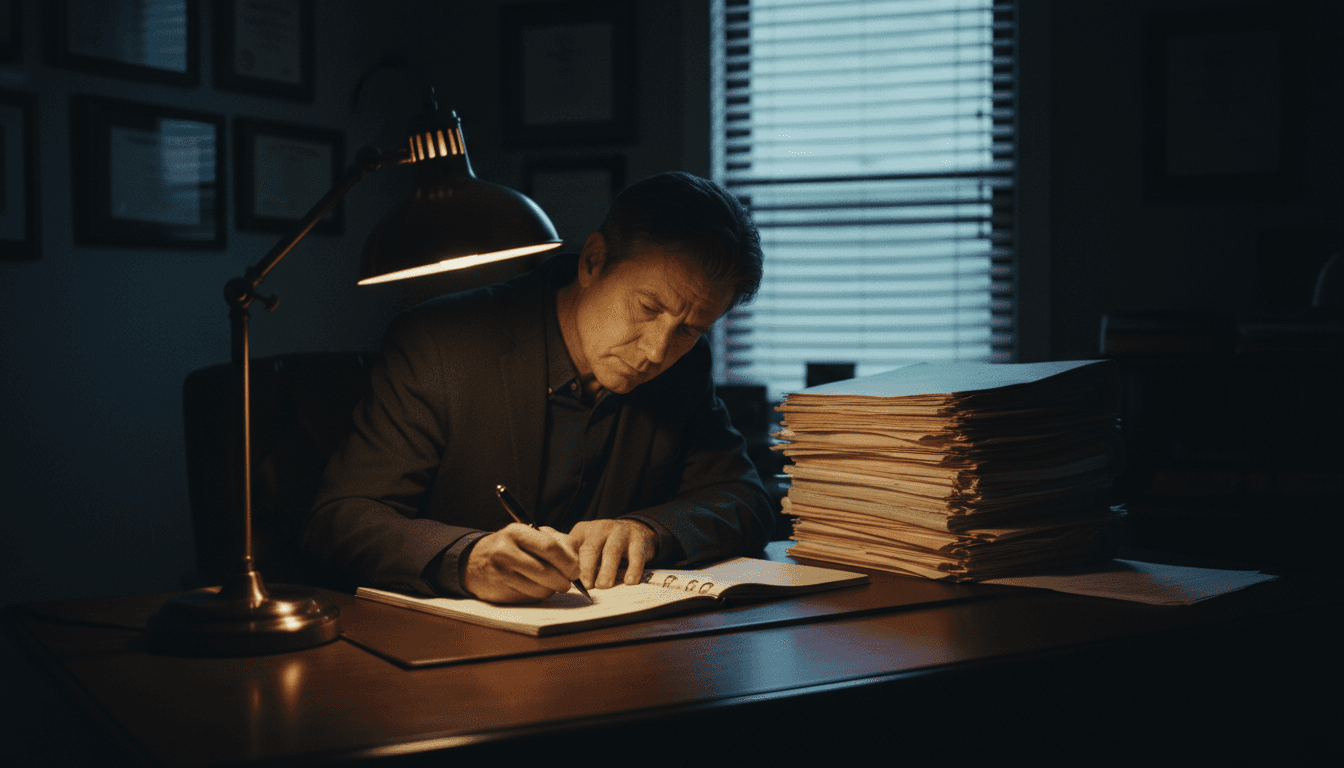
It's 7:45 PM. You've seen seven clients today. Each session demanded your full cognitive and emotional presence. Now you're staring at an EHR screen, trying to remember whether your 2:00 PM client's affect was constricted or blunted, whether you used motivational interviewing or a CBT reframe in that pivotal moment during the 11:00 AM session, and whether you documented last week's safety plan update for your 4:00 PM client accurately enough to satisfy an auditor you'll never meet.
This is the reality for psychologists across the country in 2026. Not occasionally. Daily.
The quiet truth that rarely makes it into professional development seminars or APA panels is this: manual progress note documentation is one of the most significant, sustained drains on clinical psychologists' time, energy, and professional satisfaction. It's not a minor inconvenience. It's a structural problem that shapes how you practice, how many clients you can serve, and how long you can sustain this career before something breaks.
Why This Keeps Happening
Psychology, more than almost any other healthcare discipline, relies on nuance. Your progress notes aren't just recording vitals or medication adjustments. You're capturing therapeutic dynamics, shifts in cognitive patterns, transference observations, treatment plan modifications, risk assessments, and the subtle clinical reasoning that connects them all. A single session note can require documenting DSM-5-TR diagnostic impressions, evidence-based intervention details, client responses, and measurable progress toward treatment goals.
This complexity is precisely why automation has been slow to reach your field. Template-based solutions feel reductive. Generic medical scribing tools weren't designed for the language of psychotherapy. And many psychologists have rightfully resisted technology that might compromise the depth and accuracy their documentation demands.
So the default has persisted: you write everything yourself, from memory, after the fact.
There are also systemic forces at play. Insurance and managed care requirements have expanded documentation standards without expanding the time allotted for them. Many psychologists in group practices or institutional settings are expected to maintain productivity benchmarks that leave zero scheduled time for notes. The implicit expectation? Do it on your own time.
Doctoral programs and postdoctoral training rarely include meaningful instruction in documentation efficiency. You learned to write thorough notes. You were never taught to write them quickly — and for good reason, because thoroughness matters in psychological documentation. But the consequence is a workforce of highly trained clinicians spending significant portions of their professional lives on administrative labor that doesn't leverage their actual expertise.
The Real Cost of Manual Progress Notes
The cost isn't just time, though the time is staggering. When progress notes consume one to two or more hours of your day beyond scheduled sessions, the downstream effects compound in ways that are easy to minimize but impossible to ignore.
Clinical quality suffers. Notes written hours after a session — or the next morning, or over the weekend in a documentation marathon — are reconstructions, not records. Memory is imperfect. The specific language a client used, the exact sequence of a disclosure, the micro-expressions that informed your clinical impression — these details degrade rapidly. You know this because you study cognition. And yet the system asks you to perform a memory task that your own training tells you is unreliable.
Burnout accelerates. The American Psychological Association has consistently highlighted burnout as a critical issue in the profession. Documentation burden is a primary contributor. When the work that drew you to psychology — the relational, intellectual, deeply human work of therapy — is bookended by hours of administrative writing, the emotional equation becomes unsustainable. You start to dread not the sessions themselves, but everything that surrounds them.
Client access shrinks. Every hour spent on notes is an hour not spent with clients. For psychologists in communities where waitlists stretch months long, this isn't an abstract concern. It means real people waiting longer for care they need now. Your documentation burden directly reduces the number of people you can help.
Revenue is constrained. Whether you're in private practice or salaried, there's a ceiling on what you can earn when documentation time is unbillable but unavoidable. Many psychologists unconsciously limit their caseloads not because of clinical capacity, but because they know they can't absorb the documentation load of additional clients.
Your own well-being erodes. You counsel clients on boundaries, self-care, and the importance of recovery. Meanwhile, your own evenings and weekends are colonized by chart notes. The irony isn't lost on you. It just feels inescapable.
What Leading Psychologists Are Doing Differently in 2026
Something has shifted in the past year. A growing number of psychologists — across private practice, group settings, community mental health, and integrated care — have started treating documentation efficiency not as a nice-to-have, but as a clinical and ethical imperative.
The reasoning is straightforward: if documentation burden compromises note quality, limits client access, and drives clinician burnout, then solving it isn't just an administrative upgrade. It's a clinical intervention in the health of the practice itself.
These psychologists have begun adopting AI-powered ambient scribing technology that listens to sessions (with appropriate consent and security protocols) and generates structured, clinically accurate progress notes in real time. Not generic templates. Not robotic summaries. Actual progress notes that reflect the therapeutic content, interventions used, client presentation, and clinical reasoning — formatted to meet documentation standards and payer requirements.
The psychologists who have made this transition consistently describe the same experience: they didn't realize how much the documentation burden had been shaping their entire relationship with their work until it was gone. Sessions feel different when you're not mentally cataloging details for later transcription. You're more present. Your clinical observations sharpen. The therapeutic alliance benefits because you're fully there — not half-there and half-worried about the note you'll need to write afterward.
How Scribing.io Solves Manual Progress Notes for Psychologists
Scribing.io was built for exactly this problem. It's an AI medical scribe platform designed to understand the complexity and nuance of clinical documentation — including the specific demands of psychological and psychotherapy notes.
Ambient, real-time documentation. Scribing.io listens to your session and generates a structured progress note as the session unfolds. You're not dictating into a recorder or typing between empathic reflections. You're doing therapy. The note builds itself.
Clinically intelligent output. This isn't a generic transcription tool. Scribing.io recognizes therapeutic interventions, clinical terminology, diagnostic language, and the structural elements that psychological progress notes require — including treatment plan alignment, risk assessment documentation, and measurable outcome tracking.
You stay in control. Every generated note is yours to review, edit, and approve before it goes anywhere. Scribing.io doesn't replace your clinical judgment. It eliminates the mechanical labor of translating that judgment into written documentation. You review a well-structured draft instead of building one from scratch.
Security and compliance built in. Psychologists handle some of the most sensitive information in healthcare. Scribing.io is designed with the privacy and security standards your practice demands, so you can use it with confidence.
Adapts to your style. Whether you write in SOAP format, DAP notes, narrative style, or a custom structure your practice requires, Scribing.io learns your documentation preferences and produces notes that sound like you — not like a machine.
The result: psychologists using Scribing.io are finishing their documentation within minutes of ending a session instead of hours later. They're going home on time. They're seeing more clients without feeling overwhelmed. They're writing better notes because those notes are generated from real-time session content, not reconstructed from memory.
Getting Started Takes Less Than 10 Minutes
You've spent years mastering the most complex skills in healthcare — building therapeutic rapport, navigating transference, holding space for trauma, formulating nuanced treatment plans. Learning another documentation system shouldn't require another degree.
Scribing.io is designed to be clinically intuitive. You can set up your account, configure your documentation preferences, and run your first session with AI scribing support in under ten minutes. There's no lengthy onboarding process, no IT department required, no disruption to your clinical flow.
If you've been telling yourself that the documentation burden is just part of the job — that it's the price of being thorough, the cost of caring — consider that it doesn't have to be. The thoroughness can stay. The suffering doesn't have to.
Your clients deserve your full presence. Your practice deserves to be sustainable. And you deserve to remember why you chose this work in the first place.
Try Scribing.io Free and see what it feels like to finish your last session of the day and simply — go home.


