Posted on
Jan 2, 2026
Best AI Scribe for Optometrists
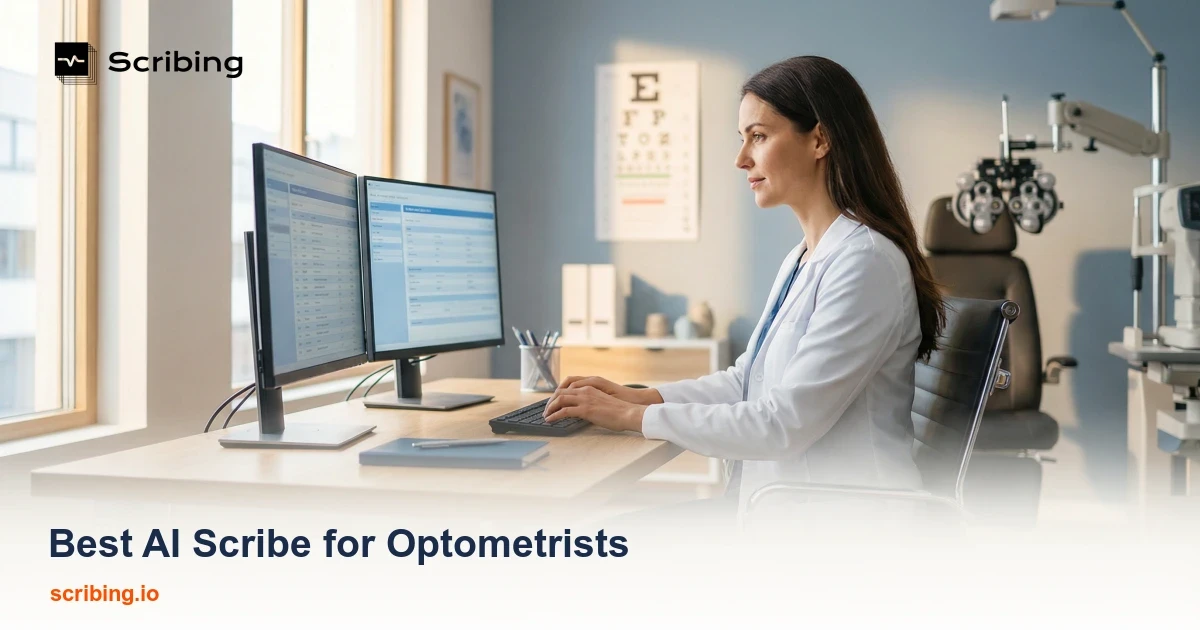
Best AI Scribe for Optometrists: Streamline Your Practice in 2026
As an optometrist, you know the challenge all too well: balancing thorough patient care with the mountain of documentation required for each visit. Between refraction notes, ocular health assessments, and ensuring proper coding for exams like 92002 and 92012, the administrative burden can feel overwhelming.
Enter AI medical scribes—technology that's revolutionizing how eye care professionals document patient encounters. But with so many options available, which AI scribe is truly the best fit for optometry practices?
Stop Manual Charting Between Eye Exams - Start your Free Trial here.
Book a quick 1-on-1 call to see the product in action.
Why Optometrists Need Specialized AI Scribes
General medical scribes often fall short when it comes to the unique documentation requirements of eye care. Optometry involves highly specialized terminology, precise measurements, and specific compliance considerations that generic solutions simply can't handle effectively.
The Documentation Challenge in Optometry
Every comprehensive or intermediate eye exam requires meticulous documentation:
Refraction Notes: Sphere, cylinder, axis measurements, visual acuity readings, and pupillary responses must be captured accurately
Ocular Health Documentation: Detailed findings from slit-lamp examinations, fundoscopy, IOP measurements, and external eye assessments
Medical Necessity: Clear documentation supporting the level of service billed
Understanding CPT Codes 92002 and 92012
Before diving into AI scribe options, let's clarify what proper documentation looks like for intermediate eye exams:
92002 - Intermediate Eye Exam (New Patient)
This code requires documentation of:
Chief complaint and relevant history
Intermediate examination of the visual system
Basic sensorimotor examination
External and ophthalmoscopic examination
92012 - Intermediate Eye Exam (Established Patient)
Similar to 92002, but for returning patients. Documentation must support:
An intermediate level of service
Medical necessity for the visit
Updated ocular and medical history when relevant
An effective AI scribe must understand these distinctions and generate notes that clearly support the chosen billing code.
Top AI Scribe Features for Optometrists
When evaluating AI scribes for your optometry practice, prioritize these capabilities:
1. Optical Terminology Recognition
The best AI scribes understand terms like:
Hyperopia, myopia, astigmatism, presbyopia
Anterior segment findings
Posterior segment observations
Common ocular conditions and diseases
2. Structured Refraction Documentation
Look for systems that automatically organize refraction data into clear, professional formats including:
Distance and near visual acuities
Manifest refraction results
Current and updated prescription details
3. Ocular Health Templates
Quality AI scribes offer templates specifically designed for:
Slit-lamp examination findings
Dilated fundus exam documentation
Tonometry readings
Visual field assessments
4. Compliance-Ready Output
Your AI scribe should generate notes that:
Meet insurance documentation requirements
Support medical necessity for billed services
Include all required elements for 92002/92012 coding
Maintain HIPAA compliance
Key Benefits of AI Scribes in Optometry
Reclaim Your Time
Most optometrists spend 1-2 hours daily on documentation. AI scribes can reduce this by up to 70%, giving you time back for patient care or work-life balance.
Improve Documentation Quality
AI doesn't get tired or distracted. Consistent, thorough documentation reduces compliance risks and supports appropriate reimbursement.
Enhance Patient Interaction
When you're not focused on typing or writing, you can maintain eye contact and build stronger patient relationships—something particularly important during eye exams.
Reduce Burnout
Documentation burden is a leading cause of physician burnout. Automating this process can significantly improve job satisfaction.
What to Look for in an AI Scribe Solution
Integration Capabilities
Ensure the AI scribe works seamlessly with your existing:
EHR/EMR system
Practice management software
Optical dispensary software
Customization Options
Your practice has unique workflows. The best AI scribes allow you to:
Create custom templates
Set preferred documentation styles
Adjust to your specific terminology preferences
Accuracy and Learning
Top-tier AI scribes:
Achieve high accuracy rates out of the box
Learn from corrections to improve over time
Handle complex medical terminology correctly
Security and Compliance
Non-negotiable features include:
HIPAA compliance
Secure data encryption
BAA (Business Associate Agreement) availability
Clear data retention policies
Making the Transition
Implementing an AI scribe in your optometry practice doesn't have to be disruptive:
Start with a pilot: Test the system with a few providers before full rollout
Train your team: Ensure staff understands how to optimize the technology
Review and refine: Regularly audit generated notes for accuracy
Gather feedback: Listen to both staff and patient perspectives
The Bottom Line
The best AI scribe for optometrists is one that understands the unique demands of eye care documentation—from precise refraction notes to comprehensive ocular health assessments. It should support proper coding for exams like 92002 and 92012 while integrating seamlessly into your existing workflow.
By choosing a specialized solution designed with optometry in mind, you can reduce documentation burden, improve compliance, and ultimately deliver better patient care.
Ready to transform your optometry practice with AI-powered documentation? The future of efficient, accurate eye care documentation is here—and it's time to see clearly what AI scribes can do for you.
Join 500+ Optometrists Who Finished Their Charts by 5 PM. Book a quick 1-on-1 call to see the product in action.


