Posted on
Nov 30, 2026
Best AI Scribe for Pediatricians
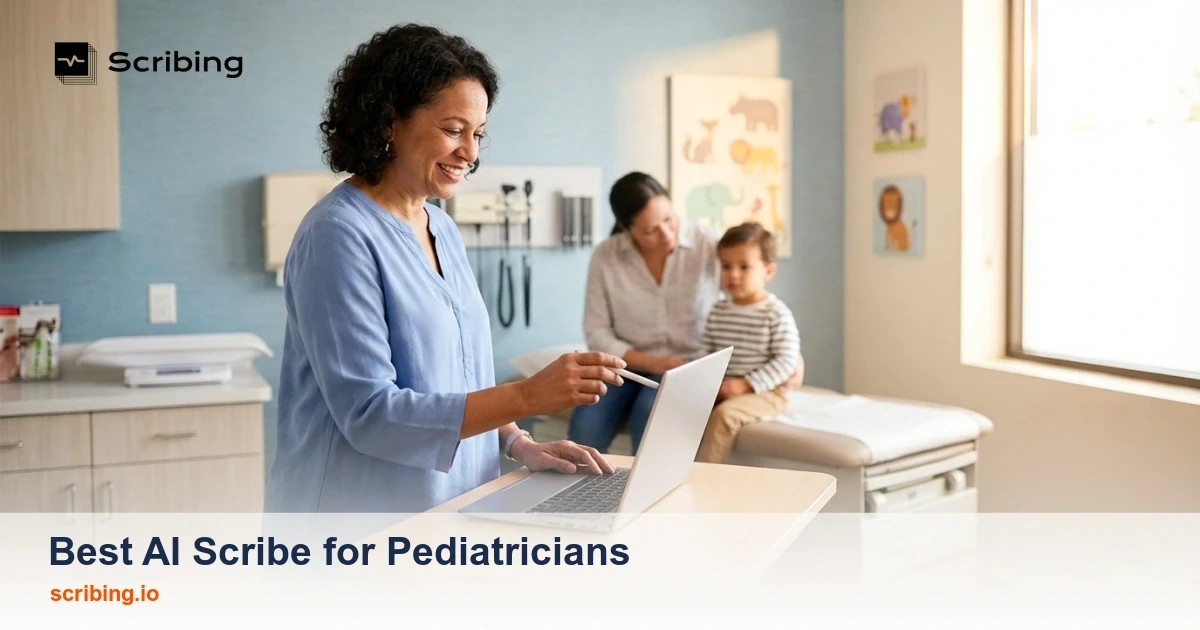
Best AI Scribe for Pediatricians: Streamlining Documentation for Child-Centered Care
Pediatric medicine presents unique documentation challenges that general-purpose AI scribes simply can't address. From tracking developmental milestones to managing anxious parents and energetic toddlers, pediatricians need specialized tools that understand the nuances of caring for children. In this comprehensive guide, we'll explore what makes an AI scribe truly effective for pediatric practices and help you find the best solution for your needs.
Why Pediatricians Need Specialized AI Scribes
Pediatric visits are fundamentally different from adult encounters. A typical well-child visit involves multiple concurrent tasks: assessing growth patterns, tracking developmental milestones, administering vaccinations, counseling parents, and engaging with children of varying ages and cooperation levels.
Traditional documentation methods often force pediatricians to choose between maintaining eye contact with young patients and completing thorough notes. An effective AI scribe bridges this gap, allowing physicians to focus entirely on patient interaction while documentation happens seamlessly in the background.
Key Features to Look for in a Pediatric AI Scribe
Bright Futures Guidelines Integration
The American Academy of Pediatrics' Bright Futures Guidelines serve as the gold standard for pediatric preventive care. The best AI scribes for pediatricians automatically incorporate these evidence-based recommendations into documentation, including:
Age-specific screening requirements
Anticipatory guidance topics appropriate for each developmental stage
Social determinants of health assessments
Mental health screening prompts for adolescents
An AI scribe that understands Bright Futures can prompt physicians about recommended screenings and automatically document that guideline-concordant care was provided, reducing both cognitive burden and compliance gaps.
Automated Growth Chart Documentation
Accurate growth monitoring is fundamental to pediatric care. Top-tier AI scribes seamlessly integrate with CDC and WHO growth charts, automatically:
Plotting height, weight, and head circumference measurements
Calculating percentiles and BMI-for-age
Flagging concerning trends or sudden percentile shifts
Documenting growth velocity over time
Generating visual charts for parent education
This automation eliminates manual data entry errors and ensures growth documentation meets quality reporting standards.
Age-Appropriate Preventive Care Coding
Pediatric billing requires precision, particularly for preventive services. Look for an AI scribe that accurately captures and suggests appropriate coding for:
Preventive Visit Codes (99391-99395)
99391: Under 1 year
99392: 1-4 years
99393: 5-11 years
99394: 12-17 years
99395: 18-39 years (young adults transitioning from pediatric care)
Vaccine Administration Codes (90460 series)
90460: First vaccine component administered to patients under 19 with counseling
90461: Each additional component with counseling
A smart AI scribe distinguishes between these codes based on documented services and patient age, optimizing reimbursement while maintaining compliance.
Top AI Scribe Solutions for Pediatric Practices
1. Pediatric-Optimized Platforms
The best AI scribes for pediatricians offer:
Smart templates that adapt based on patient age and visit type
Developmental milestone checklists embedded in the workflow
Family-centered language that captures parent concerns alongside child assessment
Adolescent confidentiality protocols for sensitive topics
2. Integration Capabilities
Seamless EHR integration is non-negotiable. Your AI scribe should communicate with:
Growth chart modules
Immunization registries
State screening programs (newborn, lead, developmental)
Patient portals for parent communication
3. Ambient Listening Technology
Modern AI scribes use ambient listening to capture natural conversations. For pediatrics, this means:
Filtering background noise (crying babies, siblings)
Distinguishing between parent and child voices
Capturing both clinical findings and counseling provided
Documenting child-friendly language while maintaining medical accuracy
Documentation Challenges Unique to Pediatrics
Multiple Stakeholders in Every Visit
Pediatric visits often involve three-way conversations between physician, parent, and child. Quality AI scribes must:
Attribute information sources correctly
Document parent-reported history versus physician observation
Capture the child's own concerns (especially for older children and teens)
Note who received counseling and education
Developmental Surveillance
Unlike adult medicine, pediatrics requires continuous developmental assessment. Effective AI documentation should include:
ASQ (Ages and Stages Questionnaire) results
M-CHAT findings for autism screening
School performance and behavioral observations
Social-emotional development markers
Vaccine Documentation Complexity
Vaccine visits require meticulous documentation. Your AI scribe should capture:
Vaccine Information Statements (VIS) provided
Lot numbers and administration sites
Patient/guardian consent obtained
Any adverse reactions or concerns
Catch-up schedule adherence
Compliance and Quality Considerations
HIPAA and Minor Patient Privacy
AI scribes handling pediatric data must maintain rigorous privacy standards, including:
Secure handling of minor patient information
Appropriate access controls for sensitive adolescent health data
Compliance with state-specific minor consent laws
Audit trails for all documentation access
Quality Measures Alignment
Pediatric practices increasingly participate in quality programs that require specific documentation. Look for AI scribes that support:
HEDIS pediatric measures
CMS quality reporting
State immunization requirements
School and sports physical requirements
Making the Transition: Implementation Tips
Start with Well-Child Visits
These structured, predictable encounters are ideal for AI scribe training and team adaptation. The consistent Bright Futures framework provides clear documentation expectations.
Customize Age-Specific Templates
Work with your AI scribe vendor to create templates matching your practice style for:
Newborn visits
Infant well-checks
Toddler and preschool visits
School-age encounters
Adolescent visits (with appropriate confidentiality settings)
Train Your Entire Team
Effective AI scribe implementation requires:
Front desk staff understanding workflow changes
Medical assistants knowing how to initiate recordings
Nurses understanding documentation review processes
Providers learning optimal communication patterns
The Future of Pediatric AI Documentation
Emerging AI capabilities promise even greater pediatric-specific functionality:
Predictive analytics identifying children at risk for developmental delays
Automated school form completion using documented visit data
Parent communication integration generating age-appropriate care summaries
Population health insights across your patient panel
Conclusion: Choosing the Right AI Scribe for Your Pediatric Practice
The best AI scribe for your pediatric practice combines robust clinical documentation with deep understanding of child health specifics. Prioritize solutions that:
✅ Integrate Bright Futures Guidelines seamlessly
✅ Automate growth chart documentation and analysis
✅ Support accurate preventive care coding (99391-99395, 90460)
✅ Handle the complexity of multi-stakeholder visits
✅ Maintain strict privacy standards for minor patients
By selecting an AI scribe designed with pediatric workflows in mind, you'll spend less time on documentation and more time building relationships with the children and families you serve. In pediatric medicine, where trust and connection directly impact health outcomes, that time savings isn't just efficient—it's better medicine.
Ready to transform your pediatric practice with AI-powered documentation? Evaluate vendors against the criteria above, request pediatric-specific demonstrations, and involve your entire care team in the selection process. Your young patients—and their parents—will thank you.


