Posted on
Jan 22, 2026
Best AI Scribe for Sleep Medicine
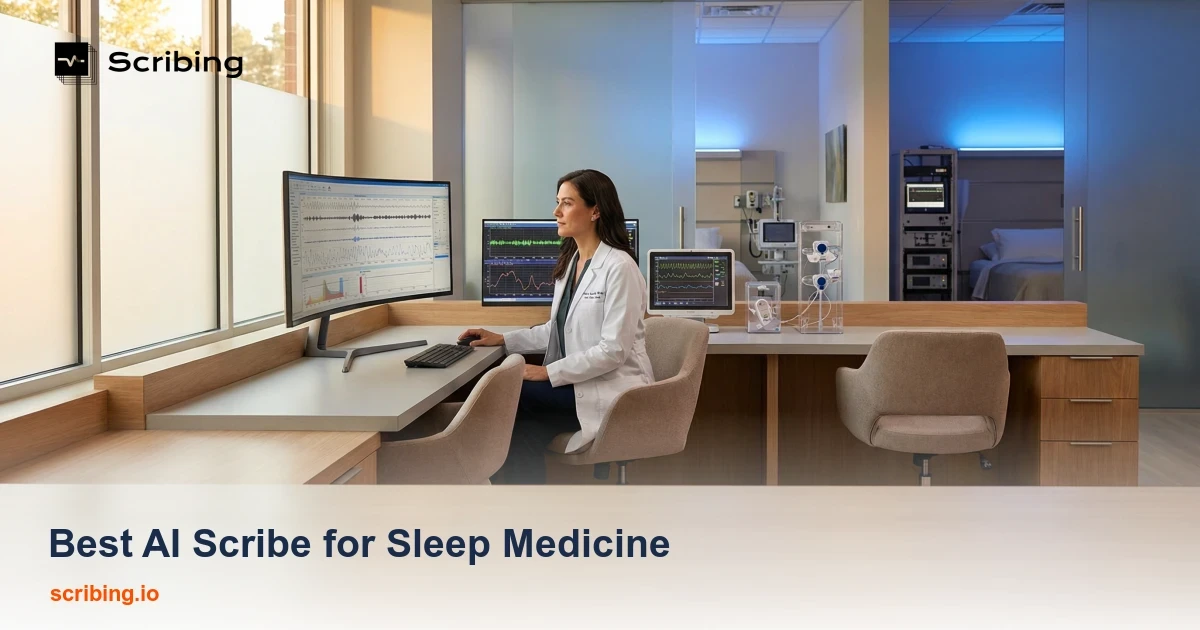
Best AI Scribe for Sleep Medicine: Streamlining Documentation for Better Patient Care
Sleep medicine practitioners face unique documentation challenges that set them apart from other specialties. From interpreting complex polysomnography (PSG) data to managing ongoing obstructive sleep apnea (OSA) treatment plans, the paperwork demands can feel overwhelming. Enter AI medical scribes—intelligent documentation assistants designed to give clinicians their time back while ensuring accuracy and compliance.
In this comprehensive guide, we'll explore what makes an AI scribe ideal for sleep medicine and how the right solution can transform your practice.
The Documentation Burden in Sleep Medicine
Sleep medicine specialists juggle multiple documentation requirements daily. A typical day might include interpreting overnight polysomnography studies (CPT 95810), conducting follow-up evaluations for OSA management (CPT 99214), and coordinating care with referring physicians and DME providers.
Each of these activities generates substantial documentation needs:
Polysomnography interpretation reports require detailed analysis of sleep architecture, respiratory events, cardiac rhythms, and limb movements
Follow-up visits demand thorough documentation of treatment adherence, symptom progression, and care plan adjustments
Consent documentation must be properly recorded for both diagnostic studies and treatment interventions
What to Look for in an AI Scribe for Sleep Medicine
Not all AI scribes are created equal, especially when it comes to specialty-specific needs. Here are the essential features to consider:
Specialty-Specific Medical Terminology
The best AI scribe for sleep medicine must understand terminology like apnea-hypopnea index (AHI), oxygen desaturation events, REM sleep behavior disorder, and CPAP titration parameters. Generic medical scribes often struggle with these specialized terms, leading to errors and additional editing time.
Consent and Compliance Documentation
Proper consent documentation is critical in sleep medicine. When scheduling patients for polysomnography (95810), your AI scribe should seamlessly capture consent discussions, including risks, benefits, and alternatives. Similarly, during follow-up evaluations (99214), the system should document informed consent for ongoing OSA management strategies.
Integration with Sleep Study Data
An ideal AI scribe should work alongside your polysomnography interpretation workflow, helping you document findings efficiently while maintaining the clinical accuracy required for proper reimbursement and medicolegal protection.
Key Benefits of AI Scribes in Sleep Medicine Practice
Reduced Documentation Time
Sleep specialists report spending 2-3 hours daily on documentation. An effective AI scribe can reduce this by 50-70%, allowing you to see more patients or reclaim personal time.
Improved Note Quality
AI scribes trained on sleep medicine documentation patterns ensure consistent, comprehensive notes that satisfy both clinical and billing requirements. This is particularly important for complex visits like OSA management follow-ups requiring 99214-level documentation.
Enhanced Patient Interaction
When you're not typing during appointments, you can focus on what matters—your patient. This improved engagement leads to better treatment adherence, especially crucial for OSA patients who often struggle with CPAP compliance.
Documentation Best Practices for Sleep Medicine with AI Assistance
For Polysomnography Interpretation (95810)
When documenting PSG interpretations, ensure your AI scribe captures:
Complete study parameters and technical quality
Sleep architecture analysis
Respiratory event summary with AHI calculations
Cardiac rhythm findings
Periodic limb movement index
Clinical interpretation and recommendations
Consent verification for the diagnostic study
For OSA Management Follow-ups (99214)
During follow-up visits, your documentation should include:
Interval history and symptom assessment
CPAP/BiPAP compliance data review
Physical examination findings
Assessment of treatment efficacy
Care plan modifications
Patient education and consent for continued management
Time-based documentation elements when applicable
Choosing the Right Solution for Your Practice
When evaluating AI scribe solutions for your sleep medicine practice, consider:
Accuracy with sleep-specific terminology — Test the system with actual clinical scenarios
Workflow integration — Does it fit seamlessly into your existing EHR?
Compliance features — Can it properly document consent and meet regulatory requirements?
Customization options — Can you create templates specific to polysomnography and OSA management?
Support and training — Is specialty-specific onboarding available?
The Future of Sleep Medicine Documentation
As AI technology continues to evolve, we can expect even more sophisticated tools that not only transcribe but also assist with clinical decision support, automatically flag concerning findings, and predict patient compliance challenges.
For now, implementing a quality AI scribe represents one of the highest-impact changes a sleep medicine practice can make. The combination of reduced administrative burden, improved documentation quality, and enhanced patient care creates a compelling case for adoption.
Taking the Next Step
If you're ready to explore how an AI scribe can transform your sleep medicine practice, start by evaluating your current documentation pain points. Consider the time spent on polysomnography interpretations, follow-up visit notes, and consent documentation. Then, seek out solutions specifically designed to address these specialty-specific challenges.
Your patients deserve your full attention, and you deserve to practice medicine without drowning in paperwork. The right AI scribe can make both possible.
Ready to see how AI-powered documentation can streamline your sleep medicine practice? Explore solutions that understand the unique demands of polysomnography interpretation, OSA management, and specialty-specific compliance requirements.


